Your cart is currently empty!

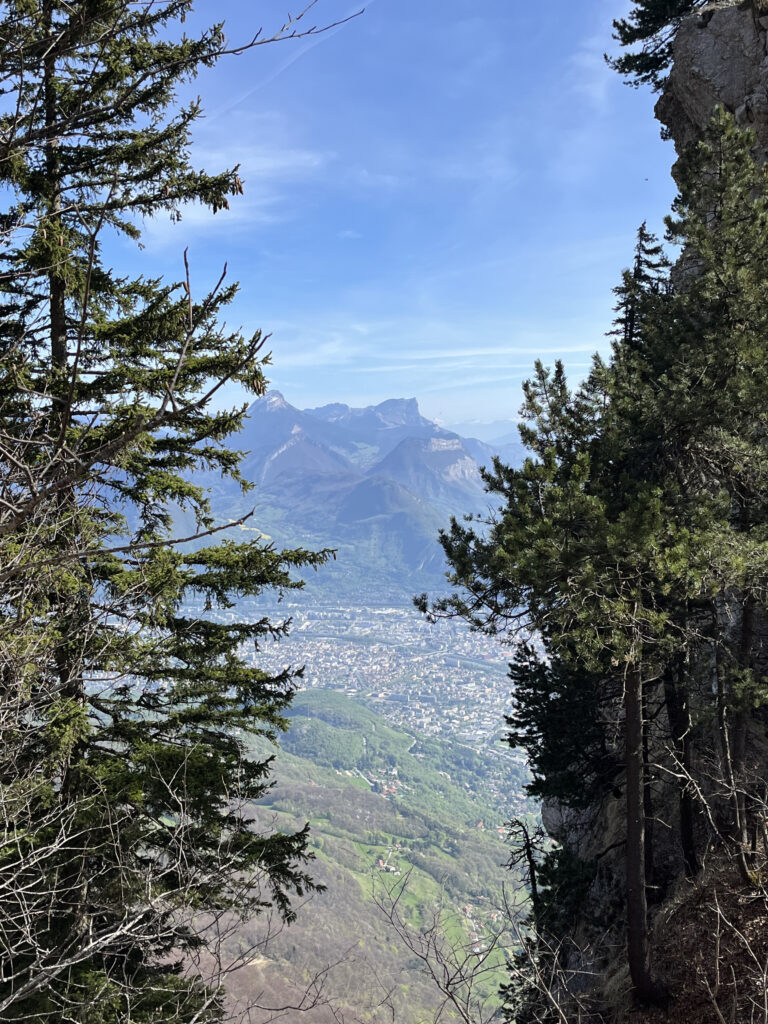
Le Moucherotte from Saint-Nizier-du-Moucherotte is an iconic hike on the outskirts of Grenoble. This peak (1,901 m) is one of the most accessible and famous in the Vercors. You will overlook the Drac valley with spectacular views of the surrounding mountains.
Between fir forests, bright clearings, and airy ridges, this gradual climb appeals to both regular hikers and those looking for a day trip.
Useful information
Departure : Saint-Nizier-du-Moucherotte (village square, 1,180 m)
Finish : Moucherotte summit (1,901 m)
Elevation gain : approx. +720 m
Duration : 3 hours uphill / 2 hours downhill
Distance : 10 km round trip
Level : Medium
Recommended period : May to October (check snow conditions)
Itinerary
Departure – Saint-Nizier-du-Moucherotte
Cross the village via the main road, then follow the signs for Le Moucherotte. The path quickly enters the forest.
Under the Pas de la Bergère
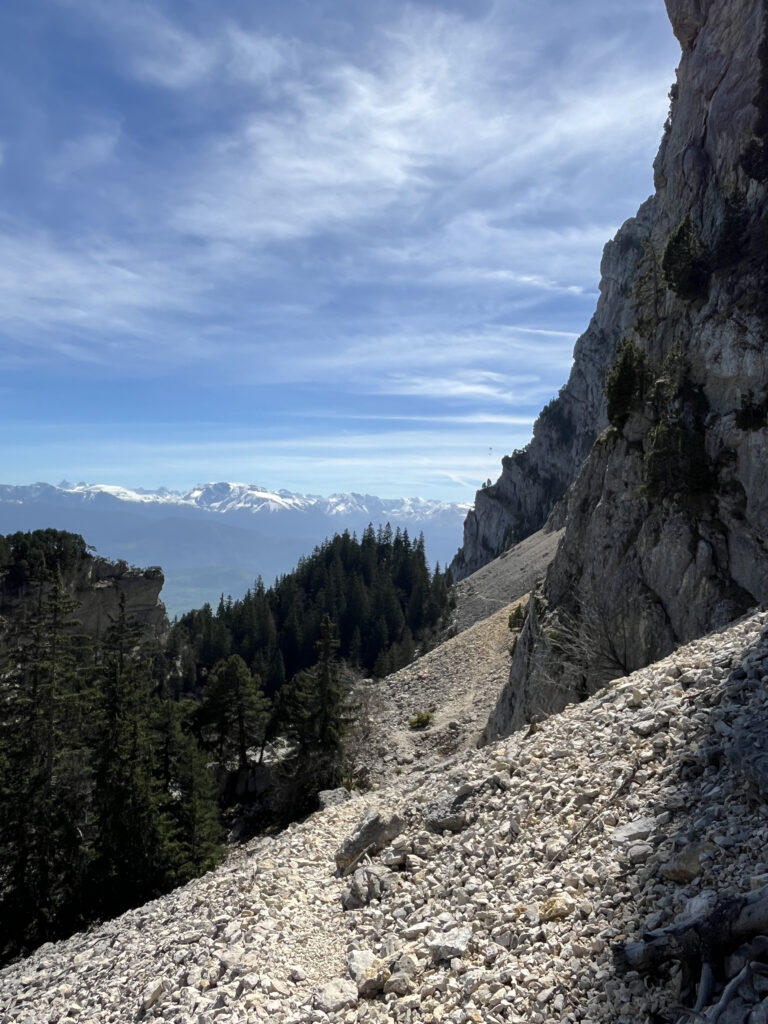
The trail winds through the forest. A few clearings already offer superb views of the eastern Vercors.
Old ski slope/disused resort
You will pass close to the remains of the old Moucherotte resort, which closed in the 1970s. It has a special atmosphere, combining nature with memories of the 1968 Olympic Games.
Arrival at the summit of Moucherotte (1,901 m)
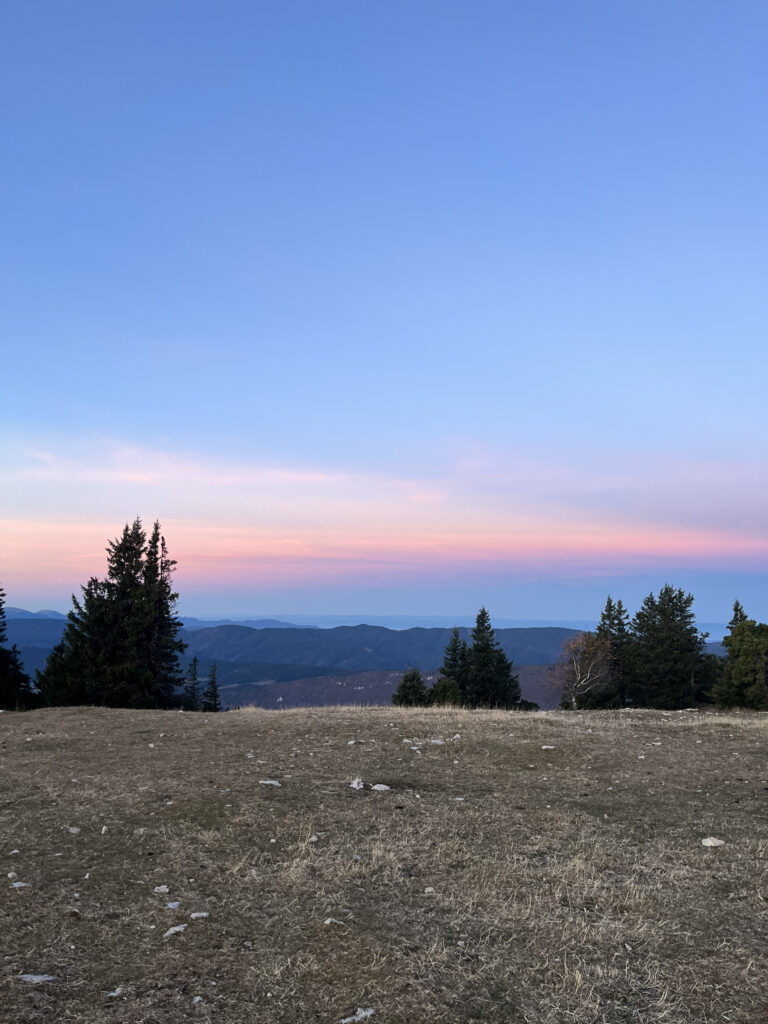
The arrival on the ridge offers a 360° panorama. You can see the city of Grenoble and the Belledonne and Chartreuse mountain ranges, the Vercors plateaus and the Ardèche mountains in the distance. On a clear day, you can see Mont Blanc on the horizon.
Descend via the same route, or make a loop via the Pas de la Bergère for a change of scenery (signs on site).
Access by soft mobility
From Grenoble, take the Transisère bus line 5110 towards Villard-de-Lans from the Grenoble bus station. The journey takes 1 hour and costs 2 euros. Get off at the Saint-Nizier-du-Moucherotte – Le Village stop. The trail starts right in the village, near the church.
Tips and Safety
Wear good walking shoes. The wind can be strong on the ridges: bring a windproof jacket.
In winter, the climb can be done on snowshoes, but is reserved for experienced hikers.